Carbon Steel Pans: The Professional Default Review
The pan most restaurant kitchens actually use, and the one home cooks skip because seasoning sounds intimidating. It isn't — and once seasoned, it does most of what cast iron and non-stick do at half the weight.
- Category
- Carbon steel frying pans
- Care
- Season, dry immediately, light oil
- Lifespan
- Decades with basic maintenance
Reasons to buy
- Naturally releases once seasoned — no coating to wear out
- Heats faster and weighs far less than cast iron
- Handles very high heat and goes into an oven
- Improves with use over decades; effectively unbreakable
Reasons to avoid
- Requires seasoning and a maintenance habit
- Rusts if left wet — this is a real, common failure
- Acidic foods strip seasoning; not a tomato-sauce pan
- Bare metal handles get hot
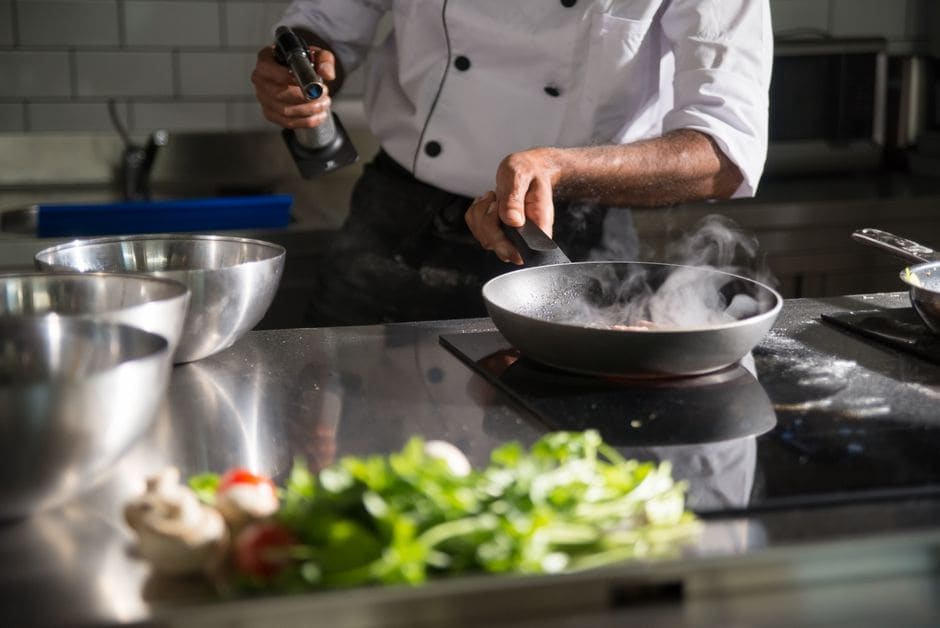
Walk into a professional kitchen and count the pans. You'll find stainless for sauces, and carbon steel for almost everything that gets seared. You will not find a wall of coated non-stick, because coated pans don't survive a service line — and yet that's what home kitchens are full of. The professionals aren't being precious; they're being cheap in the best sense, buying the pan that survives abuse and improves, because replacing equipment mid-service is not a plan.
Carbon steel is the compromise that isn't one: it seasons like cast iron, forming a polymerised oil layer that releases food, but it's markedly lighter and heats far faster. It goes from hob to oven, takes heat that would destroy a coating, and lasts decades. A well-used carbon steel pan is genuinely better at twenty years old than new. The weight difference matters more than it sounds, too: a pan you can toss one-handed is a pan you actually reach for daily, while the cast iron waits for special occasions.
The seasoning fear is overblown but not baseless. The process is straightforward — thin oil, high heat, repeat a few times — and thereafter maintenance is a habit rather than a chore: don't soak it, dry it on the hob, wipe a trace of oil in. The one genuine failure mode is leaving it wet, which produces rust. That's recoverable with a scrub and re-season, but it will annoy you. If the routine sounds demanding, notice that it's the same routine as a wooden chopping board — don't soak it, dry it, oil it now and then — and nobody calls a chopping board high-maintenance.
Expect the early stretch to look wrong. Seasoning builds unevenly — blotchy, streaky, darker in the middle where the heat lives — and new owners routinely mistake the process for a defect. It isn't; it's the surface forming, and performance improves as the layers accumulate. The pans that look terrible in photographs are usually the ones cooking best, and chasing a uniformly pretty surface is how people scrub away their own progress. Give it repetition rather than ceremony — the pan seasons itself under bacon and steaks faster than under any careful ritual.
What it isn't good at: long-simmered acidic foods. Tomato sauce and wine-heavy braises strip seasoning — that's chemistry, not a quality problem — so keep a stainless or enamelled pan for those jobs and let each pan do what it's shaped for. The bare metal handle earns a mention as well — it goes into the oven precisely because it's steel all the way through, and it will teach you to keep a dry towel within reach.
Our recommendation for most kitchens: one carbon steel pan for searing and eggs, one stainless for sauces and acidic cooking, one cheap non-stick as a consumable for the days you want zero thought. That combination costs less than a mid-range non-stick set and outlives three of them. Buy the plain, slightly ugly one from a restaurant supplier if you like; the pan doesn't care, and neither will dinner.
How we tested
The Carbon Steel Pans: The Professional Default was scored against the same written rubric we apply to every Cookware product — real-world performance, build quality, ease of use, upkeep and value. Full protocol on our How We Test page.