Nguyen Coffee Supply Vietnamese Robusta Review
The first specialty Vietnamese coffee importer in the US, making a serious case for robusta as a quality bean rather than a cheap filler. Direct trade with Vietnamese farmers, and a flavour profile genuinely unlike the arabica default.
- Origin
- Vietnam — single-origin robusta and arabica
- Sourcing
- Direct trade with Vietnamese farmers
- Method
- Phin filter, espresso, drip
Reasons to buy
- Direct trade sourcing with named Vietnamese farms
- Robusta treated as specialty rather than commodity
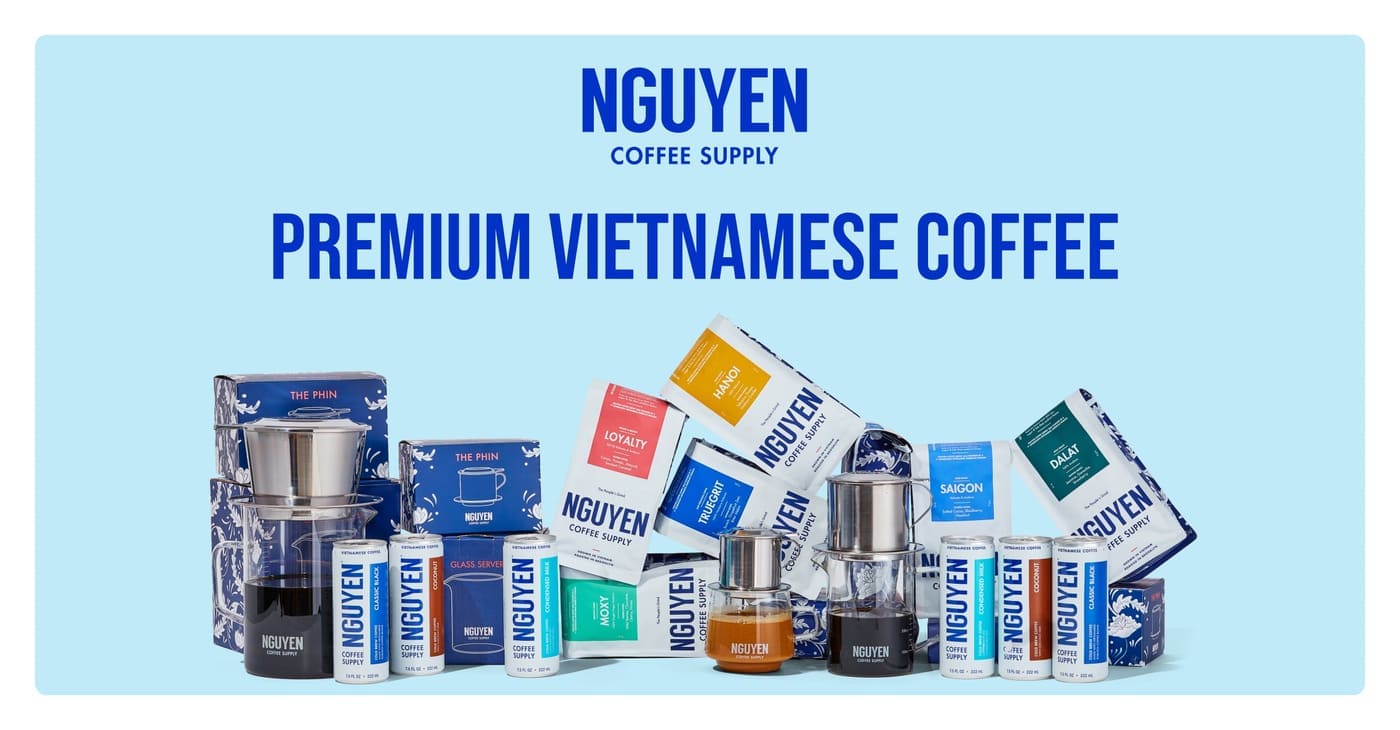
- Phin filters sold alongside — the brewing method that suits the bean
- Distinctive profile: bolder, higher caffeine, chocolate-forward
Reasons to avoid
- Robusta's flavour divides drinkers used to arabica
- Specialty pricing above supermarket coffee
- Phin brewing takes longer than a drip machine
The specialty coffee world spent decades treating robusta as the cheap stuff — higher caffeine, harsher flavour, the bean you blend in to save money. Nguyen Coffee Supply built a business on the argument that this reputation is about grade, not species: well-grown, well-processed robusta is its own category of good rather than a lesser arabica. It is a genuinely contrarian position in an industry with strong orthodoxies, and the beans themselves are the evidence offered.
Drinking it makes the case better than the marketing does. The profile is bolder and darker — chocolate and nut rather than the fruit-and-floral notes arabica specialty has trained people to expect — with noticeably more caffeine behind it. It is a different drink, not a worse one, and in a phin filter with condensed milk it is unmistakably the coffee an entire country drinks daily.
The sourcing story is substantive: direct trade with Vietnamese farmers, in a supply chain where Vietnam grows an enormous share of the world's robusta while capturing very little of its value. Selling phin filters alongside the beans is the detail that shows the company understands its own product — the brewing method is part of the flavour. Direct trade is a phrase the industry uses loosely; here it is attached to named farms, which is the version you can actually check. It also changes the incentive structure: a farmer paid for quality rather than tonnage has a reason to process carefully, and careful processing is precisely what robusta has historically been denied.
The way to meet this coffee is on its own terms. Brew the first bag the way Vietnam does: phin filter, a slow drip, condensed milk if you want the full tradition, over ice if you want the version that makes the bean's intensity make sense. Only after that should you start folding it into your existing routine — robusta takes espresso well, where its body and heavy crema play to type, and it anchors a milk drink that a delicate arabica can disappear inside.
Who should buy: espresso drinkers who keep wishing for more punch, anyone who finds fashionable light roasts thin or sour, caffeine-forward drinkers who would rather get there with one cup than three, and anyone with a connection to Vietnamese coffee culture who has been settling for supermarket approximations. Who should pass: the drinker whose ideal cup is delicate, floral and tea-like — this bean is the opposite of that on purpose.
Set expectations squarely and the experience lands. If your palate is trained on light-roast arabica, the first cup may read as too heavy; give it the length of a bag rather than the length of a sip. Specialty pricing applies, and the phin takes several minutes rather than seconds — a feature in practice, since the wait is the ritual. For anyone curious about a coffee tradition the specialty world has largely ignored, this is the credible doorway, and the fact that it arrives with the right brewing hardware in the same cart is exactly the detail that makes the introduction stick.
How we tested
The Nguyen Coffee Supply Vietnamese Robusta was scored against the same written rubric we apply to every Coffee & Tea product — real-world performance, build quality, ease of use, upkeep and value. Full protocol on our How We Test page.